A Common Question for New Christian Parents
You've just had a baby, and someone asks: "When are you going to baptize them?" Or maybe: "When's the dedication?" You smile and nod while wondering: Wait, what's the difference? Should we do one or the other? Both? Neither?
This is one of the first big spiritual decisions many Christian parents face, and it can be confusing because different churches practice different things—sometimes without explaining why. This guide will help you understand both practices, their theological foundations, and how to make a decision that honors God and fits your beliefs.
💡A Note on Denominations
What Is Baby Dedication?
Baby dedication is a ceremony in which parents publicly commit to raise their child in the Christian faith and ask God's blessing on the child's life. The church community also commits to support the family in this spiritual journey.
Key Characteristics of Baby Dedication
- •NOT considered a sacrament or means of grace
- •Does NOT save the child or wash away original sin
- •The focus is on the PARENTS' commitment, not an action done TO the child
- •Often includes a blessing or prayer over the child
- •The congregation commits to support the family
- •Sometimes called a 'christening' (though this term is also used for infant baptism)
Biblical Basis for Dedication
Advocates point to several biblical examples:
- •Hannah dedicating Samuel to the Lord (1 Samuel 1:24-28)
- •Mary and Joseph presenting Jesus at the temple (Luke 2:22-24)
- •Jesus blessing children brought to Him (Mark 10:13-16)
"So now I give him to the LORD. For his whole life he will be given over to the LORD."
— 1 Samuel 1:28 (NIV)
Who Practices Baby Dedication?
Baby dedication is typically practiced by churches that believe baptism should follow personal faith (often called "believer's baptism"). These include:
- •Baptist churches
- •Non-denominational/evangelical churches
- •Pentecostal and charismatic churches
- •Assemblies of God
- •Church of Christ (some)
- •Many Bible churches and community churches
What Is Infant Baptism?
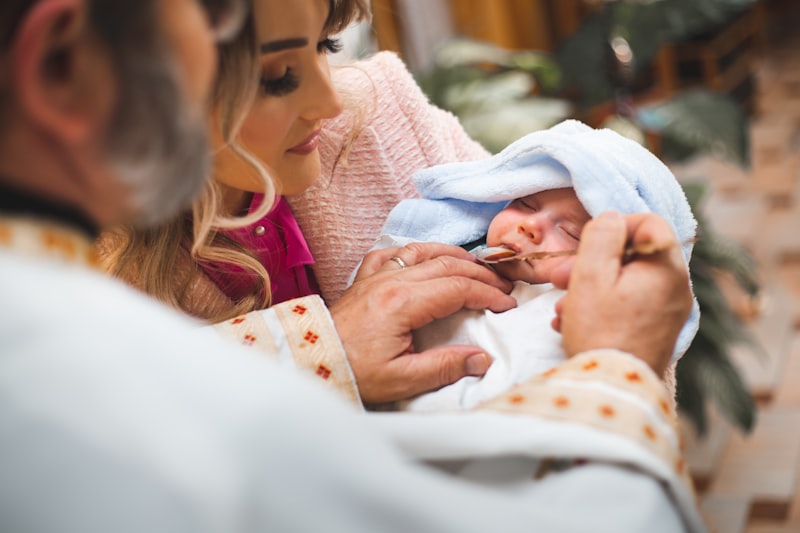
Infant baptism (also called paedobaptism) is a sacrament in which an infant is baptized with water in the name of the Father, Son, and Holy Spirit. The ceremony often includes promises by parents and godparents to raise the child in the faith.
Key Characteristics of Infant Baptism
- •Considered a sacrament (a means of grace) in most traditions that practice it
- •Views differ on what baptism accomplishes spiritually
- •Water is applied by sprinkling, pouring, or (less commonly) immersion
- •Usually involves godparents or sponsors
- •The child is welcomed into the covenant community
- •Often followed by confirmation later in life when the child professes personal faith
Biblical Basis for Infant Baptism
Advocates point to several arguments:
- •'Household baptisms' in Acts (Acts 16:15, 16:33; 1 Cor 1:16) which may have included children
- •Baptism as the New Testament equivalent of circumcision, which was given to infants (Colossians 2:11-12)
- •God's covenant with believers and their children (Acts 2:38-39)
- •Jesus' command to let children come to Him (Mark 10:14)
- •Historical practice dating to the early church
"Peter replied, 'Repent and be baptized, every one of you, in the name of Jesus Christ for the forgiveness of your sins. And you will receive the gift of the Holy Spirit. The promise is for you and your children and for all who are far off—for all whom the Lord our God will call.'"
— Acts 2:38-39 (NIV)
Who Practices Infant Baptism?
- •Roman Catholic Church
- •Eastern Orthodox churches
- •Lutheran churches
- •Presbyterian and Reformed churches
- •Methodist churches
- •Episcopal/Anglican churches
- •Most mainline Protestant denominations
Key Differences Explained
✅Baby Dedication
- •Focus on parents' commitment to raise child in faith
- •Child not a church member through the ceremony
- •Usually no water used (or just a symbolic blessing)
- •Not considered salvific or sacramental
- •Child will be baptized later upon personal profession of faith
- •Congregation commits to support the family
❌Infant Baptism
- •Focus on God's grace given to the child
- •Child becomes member of covenant community/church
- •Water applied (sprinkling, pouring, or immersion)
- •Considered a sacrament and means of grace
- •Confirmation affirms baptism when child is older
- •Godparents make vows on child's behalf
The Core Theological Difference
The fundamental disagreement is about who should be baptized and what baptism accomplishes:
Believer's Baptism View (Dedication Tradition)
Baptism is an outward sign of an inward reality—the person's personal faith in Christ. Since infants cannot believe, they cannot be baptized. Baptism follows repentance and faith (Acts 2:38). Baby dedication allows parents to commit their child to God without baptizing them before they've believed.
Covenant Baptism View (Infant Baptism Tradition)
Baptism is a sign of God's covenant promises, given to believers and their children. Just as circumcision was given to infants under the old covenant, baptism is given to covenant children under the new. God's grace works through baptism to bring the child into the covenant community. Personal faith and confirmation come later.
Neither View Teaches Automatic Salvation
Making Your Decision
How should you decide what's right for your family? Consider these questions:
⚠️When Spouses Disagree
What Happens at Each Ceremony?
A Typical Baby Dedication
- •Parents bring the baby forward during the service
- •The pastor reads Scripture and explains the purpose
- •Parents answer questions about their commitment to raise the child in faith
- •The pastor prays over the baby and family
- •The congregation may recite a commitment to support the family
- •Sometimes a certificate or Bible is given as a keepsake
- •Usually lasts 5-10 minutes during a regular service
A Typical Infant Baptism
- •Parents and godparents bring the baby to the baptismal font
- •The pastor asks questions about the parents' and godparents' faith and commitment
- •The Apostles' Creed or another statement of faith may be recited
- •Water is applied to the baby's head in the name of the Father, Son, and Holy Spirit
- •The baby is welcomed into the church community
- •A baptismal certificate is provided
- •In some traditions, the baby wears a special white gown or family baptismal dress
Preparing for the Ceremony
Regardless of which ceremony you choose, here's how to prepare:
Before the Ceremony
- •Talk to your pastor about requirements and what to expect
- •If your church requires classes, complete them
- •Choose godparents/sponsors carefully if needed (look for strong faith, not just close relationship)
- •Invite family and friends who will support your child's spiritual growth
- •Prepare any words or prayers you want to share
- •Decide how you'll capture the moment (photos, video)
What to Say to Family Who Expects Something Different
If your parents expected a baptism and you're doing a dedication (or vice versa), be prepared:
- •'We've studied what the Bible teaches and prayed about this. Here's what we believe and why...'
- •'We know this is different from our family tradition. We respect that tradition, but we've come to different convictions...'
- •'We'd love for you to be there and support us, even if it's not exactly what you expected.'
- •If they're hurt, acknowledge their feelings without abandoning your convictions
What Matters Most
Frequently Asked Questions
What if we switch churches later? Does the ceremony still "count"?
If you had an infant baptism but later join a church that practices believer's baptism, they may ask your child to be baptized upon profession of faith. If you had a dedication and join an infant-baptizing church, they may or may not recognize it. Talk to the new church about their policies.
What if we don't do anything? Is that wrong?
Neither ceremony is strictly commanded in Scripture. Not having a formal ceremony doesn't mean you're failing as a Christian parent. However, most Christian traditions encourage some public commitment to raising children in the faith. It's both a meaningful milestone and a form of accountability.
When should we do it? Is there an ideal age?
There's no required age. Most families do it within the first year of life. Some do it very early (weeks old), others wait until several months. Practically, younger babies often sleep through the ceremony more easily! Talk to your pastor about typical timing at your church.
Can both parents participate if one isn't a Christian?
Policies vary by church. Many churches allow a non-believing spouse to be present and support the believing spouse's commitment. The promises are typically made by the Christian parent. Talk openly with your pastor about your situation.
What about godparents?
The role of godparents varies widely. In some traditions, they make vows to help raise the child in faith if parents cannot. In others, it's more honorary. Choose godparents who take faith seriously and will genuinely invest in your child's spiritual life—not just close friends or family members.
"These commandments that I give you today are to be on your hearts. Impress them on your children. Talk about them when you sit at home and when you walk along the road, when you lie down and when you get up."
— Deuteronomy 6:6-7 (NIV)
💡A Prayer for Your Decision
Lord, thank You for this child You've entrusted to us. Guide us as we make decisions about their spiritual upbringing. Give us wisdom to understand Your Word and unity with each other. Whether through dedication or baptism, we commit this child to You. Help us raise them to know, love, and follow Jesus all their days. We trust You with their future, knowing You love them even more than we do. In Jesus' name, Amen.